
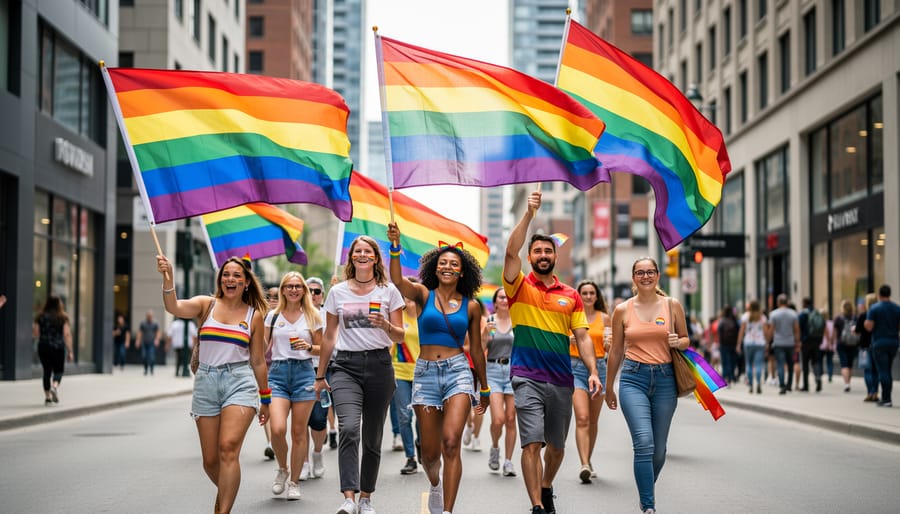
Pride season in Canada typically runs from June through August, with major celebrations concentrated in late June to early July to coincide with the anniversary of the Stonewall uprising. If you’re planning to join Pride events in 2026, you’ll find the largest festivals in Toronto, Vancouver, Montreal, and Edmonton clustered around this traditional window, though exact dates shift year to year based on local organizing committees and community needs.
The timing of Pride celebrations matters more than you might think. For newcomers to Canada or those attending their first Pride, understanding when events happen can mean the difference between watching from the sidelines and feeling fully part of the celebration. Liam Chen, who immigrated to Vancouver in 2024, remembers missing his first Pride by two weeks because he assumed all cities followed the same schedule. “I showed up to Davie Street expecting rainbow flags and found regular Saturday shopping,” he recalls. “That year taught me to check local Pride calendars early.”
Four key factors shape when you should plan your Pride experience: the specific cities you want to visit, the type of events that matter most to you (parades versus community gatherings versus club nights), your own energy and social comfort levels, and how you’ll care for yourself during and after such emotionally charged celebrations. Pride isn’t just a single weekend anymore. It has evolved into a season of visibility, with smaller communities hosting events throughout the summer and into fall, creating opportunities to celebrate multiple times or choose the setting that feels right for you.
This guide will walk you through timing windows for major Canadian Pride celebrations, planning strategies for attending multiple events, and the often-overlooked question of post-Pride emotional care. Whether this is your first Pride or your twentieth, knowing when and how to participate makes all the difference.
Quick Answer: When Does 4 Pride Season Happen in Canada?
Canada’s Pride season runs from late May through September, with the majority of major celebrations concentrated between June and August. If you’re planning to attend four significant Pride events, you’ll typically space them across this window, often starting with early-season celebrations in May or June, hitting peak summer festivals in July and August, and potentially wrapping up with September events that offer a more intimate vibe as the season winds down.
The timing between these four celebrations isn’t rigid. Some years you might attend two in quick succession during peak season, then space out the remaining two. Other years, you could spread them evenly across five months. What matters is that Canadian Pride doesn’t follow a single national date, each city sets its own schedule based on local factors, historical patterns, and community capacity.
Weather plays a significant role in this spread. Cities with milder climates, like Vancouver and Victoria, can kick off earlier or extend later into fall. Prairie and Atlantic provinces typically cluster their celebrations during guaranteed warm months. This natural variation means your four-Pride journey will likely take you through different seasons and settings, from spring’s hopeful energy to late summer’s relaxed confidence.
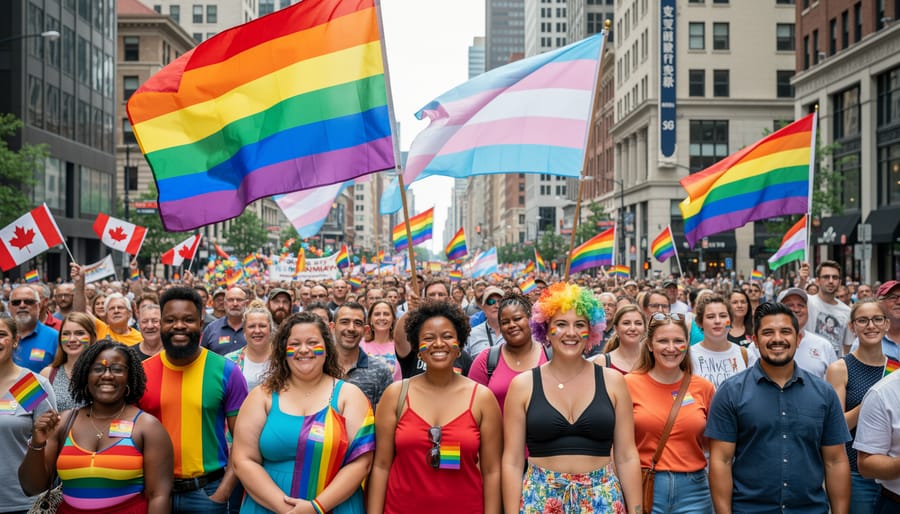
Understanding the 4 Pride Celebration Pattern
The phrase “4 pride” doesn’t refer to a single official event or program. Instead, it captures how many LGBTQ+ individuals and allies experience Pride season in Canada: as a journey through multiple celebrations rather than a one-day festival. Understanding what this means helps you shape your own Pride experience.
For some, celebrating four Prides means hitting major urban festivals across the country. Toronto Pride draws over a million participants each June, while Vancouver Pride brings the West Coast energy in early August. Montreal’s Fierté adds francophone flair, and Calgary Pride represents Prairie Pride culture. Each city offers distinct vibes, community compositions, and celebration styles.
Others interpret “4 pride” as engaging with different types of Pride events throughout the season. Canada hosts specialized celebrations that speak to specific identities and experiences within the broader LGBTQ+ spectrum:
- City-wide Festivals
- Large-scale Pride celebrations featuring parades, concerts, and multi-day programming that attract thousands of participants and showcase LGBTQ+ culture to the broader public.
- Neighbourhood Prides
- Smaller, community-focused celebrations in specific urban areas like Toronto’s Church-Wellesley Village or Vancouver’s Davie Village that emphasize local connection and cultural heritage.
- Cultural-specific Prides
- Events centred on particular identities such as Two-Spirit gatherings, Trans Pride marches, or celebrations honouring specific ethnic or racial communities within LGBTQ+ spaces.
- Virtual Pride Events
- Online celebrations, panel discussions, and digital gatherings that make Pride accessible to those in rural areas, with mobility limitations, or who prefer connecting from home.
This diversity means you can craft a Pride experience that reflects what matters most to you. Attending four different celebration types exposes you to the full richness of Canadian LGBTQ+ communities.
Marcus, a 28-year-old who moved from rural Alberta to Toronto in 2022, attended Toronto Pride, a small-town Pride near his hometown, a Two-Spirit gathering, and a digital Trans Pride event in his first year. “Each one showed me a different part of who I could be,” he says. “The big city Pride was exhilarating, but that small-town celebration where I saw queer folks still living in places like where I grew up? That healed something.”
Your “4 pride” journey is personal. It might span one summer or several years, focus on geography or identity, prioritize spectacle or intimacy. What matters is finding the celebrations that help you feel seen, connected, and proud.
Timing Windows for Major Pride Celebrations Across Canada
Early Season Celebrations (May, June)
Canada’s Pride season awakens in late May and early June, starting with celebrations in warmer regions like Vancouver and Victoria. These early festivals carry a distinct energy, fresh anticipation rather than mid-summer exhaustion, with crowds eager to kick off the season after months of winter.
Weather remains unpredictable during this window. Vancouver’s Pride typically benefits from coastal temperatures in the high teens, but pack layers and waterproof gear. Ottawa’s Capital Pride, usually spanning late August into early September, has shifted earlier in some years, meaning participants might face cool evenings requiring light jackets even during daytime events.
Early season Prides often feel more intimate than peak summer giants. Smaller cities like Penticton or Kamloops host their celebrations during this period, offering tight-knit community gatherings where you’ll actually have conversations rather than shouting over festival crowds. For newcomers to Canada’s LGBTQ+ community, these events provide gentler entry points, less overwhelming than Toronto’s massive parade, yet equally welcoming.
The trade-off? Fewer tourists mean stronger local community presence but sometimes reduced vendor variety and entertainment budgets. You’re celebrating with people who live Pride year-round, not just visitors chasing the biggest party.
Peak Summer Celebrations (July, August)
July and August represent the heart of Pride season in Canada, when the country’s largest and most vibrant celebrations take place. This peak period brings together hundreds of thousands of participants across major urban centres, creating an electric atmosphere that defines Canadian Pride culture.
Toronto Pride typically dominates the early July calendar, featuring one of North America’s largest Pride parades with over one million attendees. The sheer scale creates an overwhelming sense of community strength, though it also means strategic planning becomes essential. Vancouver Pride follows later in July or early August, offering a West Coast flavour with beach parties and outdoor events that capitalize on the city’s natural setting. Montreal Pride, often scheduled in mid-August, brings its distinct Francophone cultural identity and renowned nightlife scene to the celebration.
These peak summer events share common characteristics: extensive multi-day programming beyond the parade, significant corporate sponsorship presence, diverse stages featuring international performers, and family-friendly daytime activities alongside adult-oriented evening events. The crowds can feel intense, particularly along parade routes and in entertainment districts.
Maximize your experience by arriving early for parade viewing spots, downloading event apps for real-time schedule updates, and identifying quieter community spaces when you need breaks from the energy. Pack sunscreen, water, and phone chargers. Most importantly, balance marquee events with smaller community gatherings happening simultaneously, these often provide more intimate connections despite occurring in the shadow of major festivities.
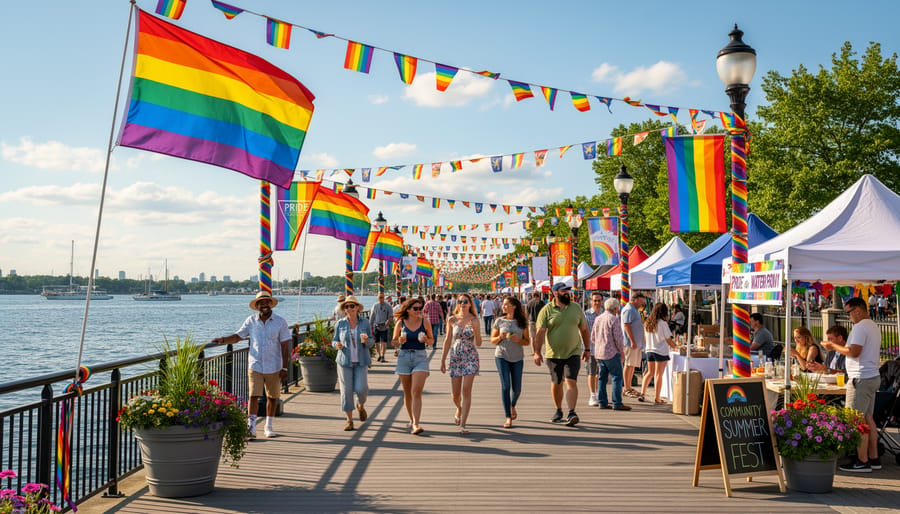
Late Season and Regional Celebrations (September)
September Pride celebrations in Canada carry a distinctly different energy from their summer counterparts. As the season winds down, these late-year events tend to be smaller and more intimate, creating space for deeper community connection rather than massive crowds.
Cities like Halifax, Ottawa, and smaller communities across the provinces often hold their Pride festivities in September. The quieter atmosphere allows for more meaningful conversations and a chance to reflect on the year’s progress. Many attendees describe September Prides as feeling less like a party and more like a family reunion, you’re more likely to have actual discussions with organizers, artists, and fellow community members than to spend the day navigating festival crowds.
Weather becomes a bigger consideration. Early September can still be warm, but you’ll want layers for evening events, especially in northern regions where temperatures drop significantly after sunset. Rain is more common, so bring waterproof gear and check whether outdoor events have backup plans. Indoor venues and community centres play a bigger role in late-season celebrations, which can actually enhance the feeling of closeness and shared purpose that makes these Prides special.

Factors That Shift Pride Timing and Planning
Weather and Regional Climate Patterns
Canada’s climate shapes Pride timing more than most countries, simply because the spread from coast to coast creates wildly different conditions. Vancouver’s Pride in late July or August benefits from the driest months on the west coast, you’re unlikely to face rain, and temperatures hover comfortably in the low twenties Celsius. Head east to the Prairies, though, and summer means unpredictable weather: Calgary and Edmonton schedule their Prides for late August or early September partly to avoid the intense heat and sudden thunderstorms of July, though you’ll still want layers for cool evenings.
Toronto’s Pride lands in late June, catching the start of humid summer but usually staying dry enough for outdoor festivals. Montreal follows a similar pattern. The Maritimes face different calculations entirely. Halifax Pride in July contends with ocean breezes that keep things cooler but can bring fog or drizzle, organizers there design events expecting weather changes mid-celebration.
For anyone planning multiple Prides across regions, pack for temperature swings of fifteen degrees or more between cities, and always have rain gear ready regardless of forecasts.
Cultural and Religious Calendars
Pride organizers across Canada carefully navigate a complex calendar to ensure their celebrations don’t clash with significant religious holidays or major cultural events. Toronto Pride, for instance, avoids scheduling during Ramadan when possible, recognizing that many LGBTQ+ Muslims want to participate fully in both observances. Vancouver Pride coordinates with organizers of other summer festivals, like the Caribbean Days Festival and Italian Day, to prevent volunteer burnout and audience fatigue.
“We’re not just looking at our own community’s calendar,” explains Sarah Chen, a Pride planning committee member in Calgary. “We’re thinking about Diwali, Lunar New Year, Indigenous ceremonies, and dozens of other celebrations that matter to our diverse LGBTQ+ community.”
This coordination becomes especially important in cities with large immigrant populations, where cultural and religious identity often intersects with LGBTQ+ identity. Many Pride organizers now consult with Two-Spirit elders and cultural leaders from various communities during the planning phase, ensuring the timing honors multiple traditions rather than forcing people to choose between their identities. This approach has led to more inclusive celebrations and stronger coalitions between LGBTQ+ organizations and other marginalized communities.
Immigration Status and Travel Considerations
Newcomers to Canada and international visitors have specific considerations when planning Pride participation. If you’re on a visitor visa, you can attend public Pride events without restrictions, parades, festivals, and community gatherings welcome all participants regardless of immigration status. However, most large Pride celebrations occur during Canada’s peak tourist season from June through August, so book accommodations early and ensure your visitor status covers your entire planned stay.
For those on work or study permits planning to attend multiple Pride celebrations across provinces, confirm your travel documents allow interprovincial movement, most do, but having your documentation readily available prevents issues. Newcomers settling permanently in Canada often find Pride celebrations an essential part of building community connections. Arriving in time for your city’s Pride means immediate access to community resources, welcoming spaces, and networks that extend well beyond the celebration itself. Many settlement services coordinate Pride-related activities specifically for LGBTQ+ newcomers, helping bridge the gap between arrival and belonging. If your immigration journey means you miss Pride season, remember that most Canadian cities maintain active LGBTQ+ community centres year-round, and connecting before Pride helps you enter the celebration with established friendships rather than as a complete newcomer.
Planning Your Personal 4 Pride Journey
Choosing Which Celebrations to Attend
Choosing which Pride celebrations to attend across Canada involves balancing your personal interests, energy levels, and what you hope to gain from each experience. Start by identifying what matters most to you: do you want to experience the energy of massive festivals like Toronto Pride with its million-plus attendees, or would you prefer the intimate community feel of smaller regional celebrations?
Geographic diversity can enrich your Pride journey. Attending events in different provinces exposes you to distinct regional queer cultures, Vancouver’s Pride reflects West Coast openness, Montreal’s incorporates Francophone LGBTQ+ heritage, while Prairie Prides often emphasize tight-knit community bonds. Consider selecting one major urban Pride, one regional celebration, and two that represent specific identities or causes meaningful to you.
Cultural and identity-focused celebrations deserve special consideration. Two-Spirit Pride events honour Indigenous LGBTQ+ traditions, Trans Pride centres transgender and non-binary experiences, and Fierté gaie recognizes Francophone queer culture. These specialized events offer deeper connections within specific communities and often provide educational opportunities you won’t find at general Pride festivals.
Think practically about timing and capacity. Attending four Prides in quick succession can be emotionally and physically draining. Spacing them throughout the season, early summer, mid-season, late August, and September, gives you recovery time and extends your Pride experience across months rather than cramming celebrations into weeks.
Budgeting and Accessibility Considerations
Pride celebrations range from completely free street festivals to ticketed events costing hundreds of dollars. If you’re planning multiple celebrations, creating a realistic budget prevents financial stress from overshadowing the experience.
Most Pride festivals offer free components: parades, street parties, and community spaces never charge admission. Paid elements typically include ticketed parties, VIP experiences, and special performances. Alex Chen, who attended four Prides across Canada in 2023, shares: “I set aside money for travel and accommodation but kept events mostly free. I spent maybe $50 total on actual Pride activities and still had incredible experiences at every city.”
Travel represents the biggest expense for multi-city Pride participation. Consider bus travel instead of flights, shared accommodation through LGBTQ+ community networks, or volunteering with Pride organizations in exchange for accommodation. Many cities offer billeting programs that connect visitors with local community members.
Financial constraints shouldn’t prevent participation. Free Pride events offer the same sense of community and celebration as expensive parties. Community centers and LGBTQ+ organizations often organize no-cost gatherings specifically designed for accessibility. Pride belongs to everyone, regardless of budget, and the most meaningful moments rarely require spending money.
Connecting with Local Communities
Finding local LGBTQ+ communities before Pride can transform your experience from spectator to participant. Start by checking Pride event websites months ahead, they usually list affiliated community groups, volunteer opportunities, and pre-Pride mixers. Social media groups specific to each city (search “[City] LGBTQ+” or “[City] Pride 2026”) often share insider events and meetups that don’t make official calendars.
For newcomers to Canada, community centres like The 519 in Toronto or Qmunity in Vancouver offer drop-in programs year-round, helping you build connections before the Pride rush. Many cities have newcomer-specific LGBTQ+ groups that understand the unique challenges of navigating both immigration and queer identity. Local Facebook groups and apps like Meetup frequently organize casual coffee meetups or activity groups, hiking, board games, book clubs, that feel less overwhelming than big events.
Contact Pride organizations directly through their volunteer coordinators. Volunteering gets you behind the scenes, introduces you to locals who live there year-round, and grounds your Pride experience in community rather than tourism.
Aftercare and Reflection: Making Pride Meaningful Beyond the Celebration
Attending multiple Pride celebrations across Canada can create a powerful emotional arc, from the exhilaration of visibility and community connection to an unexpected crash afterward. Maya Chen, a Toronto-based community organizer, describes the phenomenon clearly: “After my fourth Pride event last season, I felt simultaneously energized and completely drained. The joy was real, but so was the emotional exhaustion.” This comedown is common and deserves attention, especially for those who’ve invested significant time and energy celebrating across different cities.
The contrast between Pride’s heightened atmosphere and everyday life can feel jarring. You’ve spent weeks or months surrounded by visible queer joy, rainbow flags, and crowds affirming your identity, then suddenly you’re back to spaces where you might be the only LGBTQ+ person in the room. Dr. Amir Patel, a psychologist specializing in LGBTQ+ mental health at the University of British Columbia, notes that this transition requires intentional care: “Pride isn’t just a party, it’s an intense period of emotional openness and community immersion. Give yourself permission to rest and process what you’ve experienced rather than immediately returning to your regular pace.”
Creating sustainable practices for the post-Pride period helps transform temporary celebration into lasting community connection. Consider these approaches:
- Schedule regular check-ins with friends you met at Pride events, even virtually, to maintain the connections you built
- Journal about moments that moved you during celebrations to identify what resonated most deeply
- Join local LGBTQ+ organizations or volunteer opportunities to channel Pride energy into year-round advocacy
- Establish boundaries around how much you discuss Pride with others, protecting your experience from explanation fatigue
- Plan smaller, quieter queer gatherings in the months following Pride to sustain community without the intensity
- Seek counseling or support groups if Pride brought up difficult emotions about acceptance, identity, or past experiences
Jamal Williams, who immigrated to Calgary three years ago, found that his post-Pride routine became as meaningful as the celebrations themselves. “I started a monthly coffee meetup with people I met at Vancouver and Calgary Prides. Those quiet conversations about our lives, without the noise and crowds, helped me feel like I truly belonged in Canada’s queer community.”
The goal is not to maintain Pride’s intensity year-round, that’s neither possible nor healthy. Instead, let the celebration remind you what’s worth sustaining: visibility where safe, connection to community, and ongoing commitment to LGBTQ+ equality beyond June’s rainbow flags.
Frequently Asked Questions
Do I need to attend Pride in my own city first?
Not at all, you can start your Pride journey wherever feels right for you. Some people find larger city celebrations offer more anonymity if they’re not fully out, while others prefer starting with smaller local events where community connection feels more intimate.
Can I participate in Pride celebrations if I’m not out yet?
Absolutely, and you’re not alone in this. Many attendees aren’t fully out, and Pride spaces are designed to be affirming environments where you can explore your identity safely. Consider attending events in cities where you’re less likely to encounter people from your daily life, or start with larger parades where you can blend into crowds.
Are Pride events safe for newcomers to Canada?
Canadian Pride celebrations are generally welcoming and safe, with organizers working closely with local authorities to ensure security. If you’re new to Canada and concerned about safety or your immigration status, reach out to local LGBTQ+ organizations beforehand, they can provide guidance specific to your situation and connect you with community members who’ve navigated similar concerns.
How do I find LGBTQ+-friendly accommodation when traveling for Pride?
Look for listings explicitly marked as LGBTQ+-friendly on platforms like Airbnb, or check with local Pride organizations for recommendations on welcoming hotels and neighbourhoods. Many cities also have LGBTQ+ community centres that maintain lists of affirming businesses and can help you find safe, comfortable places to stay.
What if Pride dates conflict with work or family obligations?
This happens more often than you’d think, and it’s okay to prioritize what works for your life. If you can’t attend the main parade weekend, most Pride celebrations span several days or even weeks with smaller events, film screenings, community dinners, workshops, that might fit your schedule better.
How do virtual Pride options fit into a ‘4 pride’ plan?
Virtual events count just as much as in-person celebrations, especially if travel costs, accessibility needs, or personal circumstances make physical attendance difficult. Many Pride organizations now offer hybrid programming, so you could attend two events in person and join two others virtually, creating a Pride season that works for your reality rather than an idealized version.
These questions reflect genuine concerns that come up when planning to celebrate Pride across multiple cities or events. The beauty of Canada’s diverse Pride landscape is that there’s no single right way to participate, your Pride journey should honour both your circumstances and your desire for community connection.
For newcomers especially, remember that attending Pride can be part of building your life in Canada, not something separate from it. The connections you make at these celebrations often extend beyond the festival itself, becoming part of your support network throughout the year. If language is a barrier, many larger Pride events offer multilingual resources and volunteers who speak various languages, reflecting Canada’s multicultural reality.
Celebrating 4 pride, whether you attend four distinct festivals, engage in four different types of Pride activities, or simply find four meaningful moments of affirmation throughout the year, is fundamentally a personal journey. There’s no single correct way to experience Pride season in Canada. What matters is that your participation feels authentic to you and contributes to the collective strength of our communities.
For some, Pride means travelling across the country to experience the unique character of celebrations in Toronto, Vancouver, Montreal, and beyond. For others, it’s volunteering at your local parade, attending a community panel discussion, supporting LGBTQ+ businesses, and having meaningful conversations with family. Both approaches are equally valuable. Pride isn’t measured by the number of events you attend, but by how it deepens your connection to yourself and others.
The celebrations we’ve explored here represent moments in time, vibrant, necessary, joyful. But the true spirit of Pride extends far beyond those summer weekends. It lives in the everyday choices to be visible, to advocate for equality, to support those still finding their voice. Each time you show up authentically, you strengthen the community bonds that make Pride possible in the first place.
LGBTQ+ Town Hall Canada exists to support these connections year-round, creating inclusive spaces where understanding flourishes and community thrives beyond the confines of any single celebration. Whether you’re a long-time community member or someone just beginning to explore your identity, your presence matters. Your story contributes to the larger narrative of equality and belonging we’re building together across this country.






+ There are no comments
Add yours