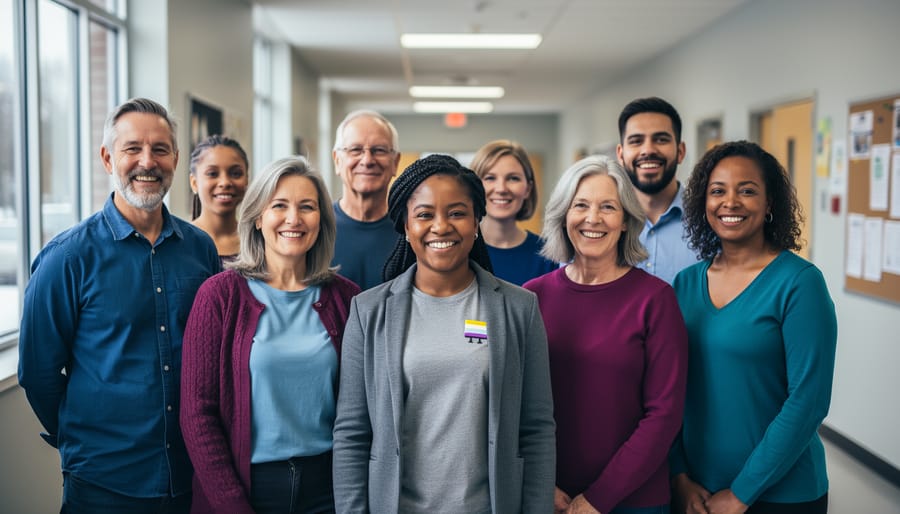
Diverse genders refers to the full spectrum of gender identities beyond the binary categories of man and woman, including non-binary, genderqueer, Two-Spirit, agender, genderfluid, and many other identities that reflect how people truly experience and express their gender. Understanding this diversity matters because it acknowledges the reality that gender is not a simple either-or proposition but rather a deeply personal aspect of human identity that varies widely across individuals and cultures.
For many Canadians, the conversation around diverse genders has shifted from theoretical discussion to practical necessity. Schools are updating their policies, workplaces are revising their forms, and healthcare providers are training staff to create spaces where everyone feels seen and respected. Yet confusion persists. What language should we use? How do we move beyond tolerance to genuine inclusion?
The answers begin with recognizing that gender-diverse people have always existed. Indigenous communities across Turtle Island honoured Two-Spirit individuals long before colonial gender binaries were imposed. Today’s visibility doesn’t represent a new phenomenon but rather a reclaiming of space and language to describe experiences that were never adequately captured by limited categories.
When Jamal, a high school teacher in Vancouver, first encountered a student who used they/them pronouns, he felt uncertain. After attending a professional development session on gender diversity and speaking with the student directly, he realized the adjustment was simpler than he’d imagined. It required curiosity, respect, and a willingness to learn. Those same qualities drive meaningful inclusion in every setting, from Pride season planning to everyday workplace interactions.
This guide offers clarity on terminology, explores why gender diversity enriches our communities, and provides concrete strategies for creating environments where all genders are affirmed and celebrated.
Understanding Diverse Genders: Beyond the Binary
The Distinction Between Gender Identity, Expression, and Sex Assigned at Birth
Understanding gender diversity requires distinguishing between three concepts that many people wrongly treat as interchangeable: sex assigned at birth, gender identity, and gender expression.
Sex assigned at birth is the label doctors or midwives place on a birth certificate based on observable physical characteristics. This designation happens at a single moment and reflects an external assessment, not an internal reality. It’s a starting point, not a definition of who someone is.
Gender identity is your internal, deeply felt sense of your own gender. This might align with the sex you were assigned at birth, or it might not. For some people, gender identity falls outside the male-female binary entirely. It’s about who you know yourself to be, regardless of what others assumed about you. Your gender identity lives in your mind and heart. No one else can determine it for you.
Gender expression is how you present your gender to the world through clothing, hairstyle, mannerisms, name, pronouns, and other external signals. Someone assigned female at birth might have a masculine gender expression but identify as a woman. A non-binary person might dress in ways society codes as traditionally feminine. Expression and identity don’t have to match conventional expectations.
This distinction matters because diverse genders are fundamentally about identity, about people’s authentic sense of self. When programs and policies conflate these concepts or reduce gender to biology or appearance, they erase the lived reality of gender-diverse individuals and create barriers to genuine inclusion.
Why Recognition of Diverse Genders Matters
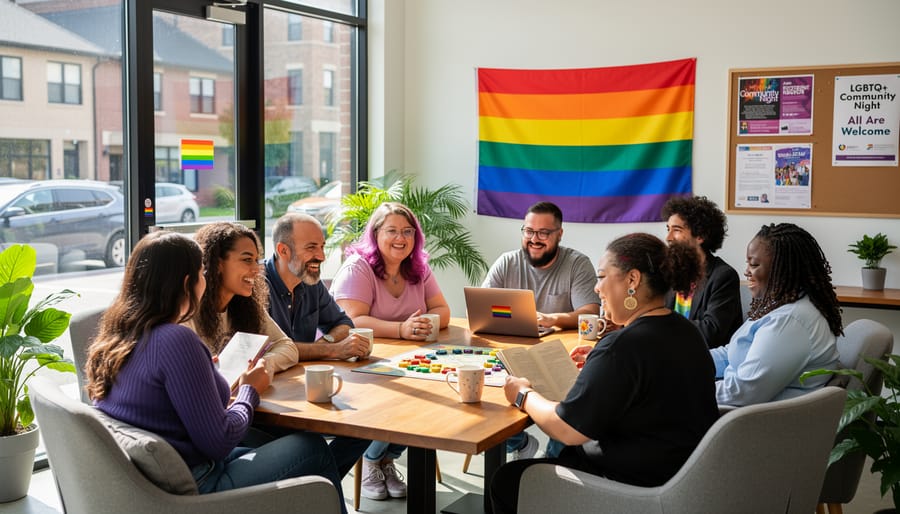
When Canadian institutions fail to recognize someone’s gender identity, the harm is not abstract. It shows up in anxiety before entering a public washroom, in skipping medical appointments, in job applications that force uncomfortable choices. For gender-diverse people, being seen and respected is not about politics or preferences; it is survival.
The mental health impact of gender recognition is documented and stark. Trans and non-binary youth who are affirmed in their identities report significantly lower rates of depression and suicidal ideation compared to those who face repeated misgendering or invalidation. When workplaces, schools, and community programs get it right with correct names, pronouns, and inclusive policies, they create conditions where gender-diverse people can focus on thriving instead of constantly defending their existence.
Alex Chen, a non-binary university student in Vancouver, describes the exhaustion of navigating Canadian institutions built around binary assumptions. “Every form is a reminder that I don’t fit. Every time I correct someone on my pronouns at the health clinic, I calculate whether it’s worth the awkwardness. When my gym added an all-gender changing room and my college updated their records system to include non-binary options, it felt like I could finally just exist without explaining myself constantly.”
Safety hinges on recognition too. Gender-diverse people face disproportionate rates of harassment and violence, risks that increase when they must use facilities or access services that do not match their identity. Legal recognition through updated identification documents matters practically: it reduces the chance of being outed, questioned, or denied service in everyday situations from banking to border crossings.
Social inclusion expands when institutions acknowledge diverse genders. Workplaces that implement inclusive policies retain talented employees who might otherwise leave. Schools where gender-diverse students feel safe see better academic outcomes. Community organizations that actively welcome all genders, from sports leagues to community Pride events to support groups, strengthen the entire social fabric by modeling respect and belonging.
The cost of recognition is minimal; training, policy updates, and new forms require modest investment. The cost of invisibility is measured in lost potential, damaged health, and lives constrained by systems that refuse to see people as they are.
What Gender-Diverse and Queer-Inclusive Programs Look Like in Practice
Essential Elements Every Inclusive Program Needs

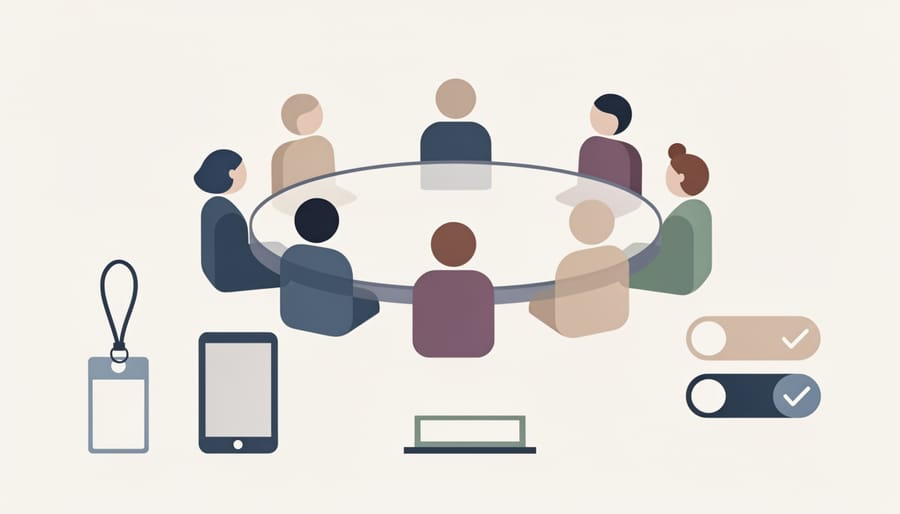
Creating genuinely inclusive programs requires more than good intentions. It demands structural changes across four core areas that work together to signal safety and respect to gender-diverse participants.
Staff training forms the foundation. Everyone who interacts with participants needs education on diverse gender identities, proper pronoun usage, and how to respond when mistakes happen. This can’t be a one-time workshop. Effective programs build ongoing learning into their culture, with regular refreshers and new staff onboarding that treats gender competency as essential, not optional. Training should include practical scenarios: what to do when someone shares their pronouns, how to handle intake forms respectfully, and how to intervene when other participants use harmful language.
Policy updates translate values into concrete rules. Review every document for gendered language and binary assumptions. Membership forms, bathroom policies, dress codes, and participation eligibility all need scrutiny. Replace “male/female” checkboxes with open fields. Update washroom policies to ensure access based on gender identity. Make pronoun sharing available but never mandatory. These written commitments protect both participants and staff by establishing clear expectations.
Physical space modifications demonstrate immediate commitment. Gender-neutral washrooms with floor-to-ceiling stalls offer privacy and access. Changing facilities with private options accommodate everyone. Signage matters too: avoid unnecessary gendering of spaces, activities, or roles. Even small touches like registration tables displaying staff pronouns or intake forms asking “what name would you like us to use?” signal awareness.
Communication practices shape daily interactions. Use inclusive language in all materials. Ask everyone their pronouns rather than assuming. When you make mistakes, apologize briefly and move on without centering your discomfort. Create multiple channels for feedback so gender-diverse participants can flag concerns without public confrontation.
These elements work as a system. Miss one, and the others lose impact.
The Legal Landscape in Canada: Where We Stand in 2026
Canada offers some of the world’s strongest legal protections for gender-diverse individuals, though understanding the full landscape requires looking at both federal frameworks and provincial nuances. At the federal level, the Canadian Human Rights Act explicitly prohibits discrimination based on gender identity and gender expression in federally regulated sectors including banking, telecommunications, and transportation. Bill C-16, which amended both the Human Rights Act and the Criminal Code in 2017, remains the cornerstone of these protections, establishing that discrimination and hate crimes targeting someone for their gender identity carry the same legal weight as those based on race or religion.
Provincial and territorial human rights codes mirror these protections with varying degrees of specificity. Ontario, British Columbia, and Manitoba have particularly comprehensive frameworks that extend to housing, employment, and services. Quebec’s Charter of Human Rights and Freedoms takes an inclusive approach, while some provinces embed protections within broader anti-discrimination categories. For organizations developing gender-diverse programs, this means your baseline obligations are federally mandated, but provincial legislation may require additional considerations when planning safer events or establishing service standards.
Immigration presents its own considerations. Canada allows applicants to select “X” as a gender marker on immigration documents, and the refugee system recognizes gender identity-based persecution as grounds for protection. Gender-diverse newcomers can access settlement services designed to address their specific needs, though availability varies by region. This legal openness creates both opportunity and responsibility for community programs serving newcomers.
For program developers, the legal landscape means three things: you must accommodate diverse gender identities as a matter of law, not preference; your policies need regular review as case law evolves; and you can point to robust legal frameworks when advocating for resources or responding to resistance. The law is on your side when building truly inclusive spaces.
How Organizations Can Transform Their Programs
Common Mistakes to Avoid
Even well-meaning organizations stumble when shifting to gender-diverse inclusion. The most common mistake is treating gender diversity as a checkbox exercise, adding pronouns to email signatures while changing nothing about how programs actually operate. This performative inclusion creates cynicism rather than trust.
Another frequent error: assembling an all-cisgender team to design “inclusive” programming without compensating gender-diverse community members for their expertise and lived experience. You’re not entitled to free consultation from the people you claim to serve. Building truly inclusive programs requires paying gender-diverse consultants, hiring gender-diverse staff, and centering their voices in decision-making.
Many programs also stumble by creating separate “LGBTQ+ days” or special accommodations rather than integrating inclusion into everyday operations. This tokenizes gender-diverse participants and signals they don’t fully belong in mainstream programming. Integration, not segregation, should be your goal.
Stop using the phrase “preferred pronouns”, pronouns aren’t preferences, they’re requirements. Don’t ask invasive questions about bodies or medical transitions. And never assume someone’s gender identity based on their appearance or name.
The difference between performative and substantive change is simple: performative inclusion is visible but shallow (rainbow logos during Pride month), while substantive change transforms structures, policies, and power distribution even when no one’s watching. If your “inclusion” efforts would evaporate without public recognition, they’re performative. Real change means revising intake forms, retraining staff, updating bathrooms, and redistributing decision-making power to gender-diverse community members themselves.
Understanding and respecting diverse genders isn’t a box to check or a policy to file away. It’s an ongoing practice that asks us to stay curious, keep listening, and remain willing to adapt as our communities evolve. The gender-diverse individuals in your neighborhood, workplace, and programs aren’t waiting for perfection. They’re looking for genuine effort and the willingness to get it wrong, learn, and do better.
Gender-diverse and queer-inclusive programs transform entire communities, not just the people they’re designed to serve. When organizations create spaces where everyone can show up authentically, they model what respectful society actually looks like. Kids learn that difference is normal. Staff develop stronger communication skills. Everyone benefits from cultures built on dignity rather than assumptions.
The next steps for programs start small: review your intake forms this week, ask staff what training they need, listen to the gender-diverse people already in your community. Change doesn’t require a massive budget or complete overhaul. It requires commitment.
Your sphere of influence matters, whether you’re running a community center, teaching a class, or serving on a board. Start where you are. The work of inclusion is never finished, and that’s exactly the point.





+ There are no comments
Add yours